CHAMPIONING COMMUNITY & INDEPENDENT VOICES
with Film Programmer Autumn Johnson
march 4, 2026 - INTERVIEW BY hannia yeverino
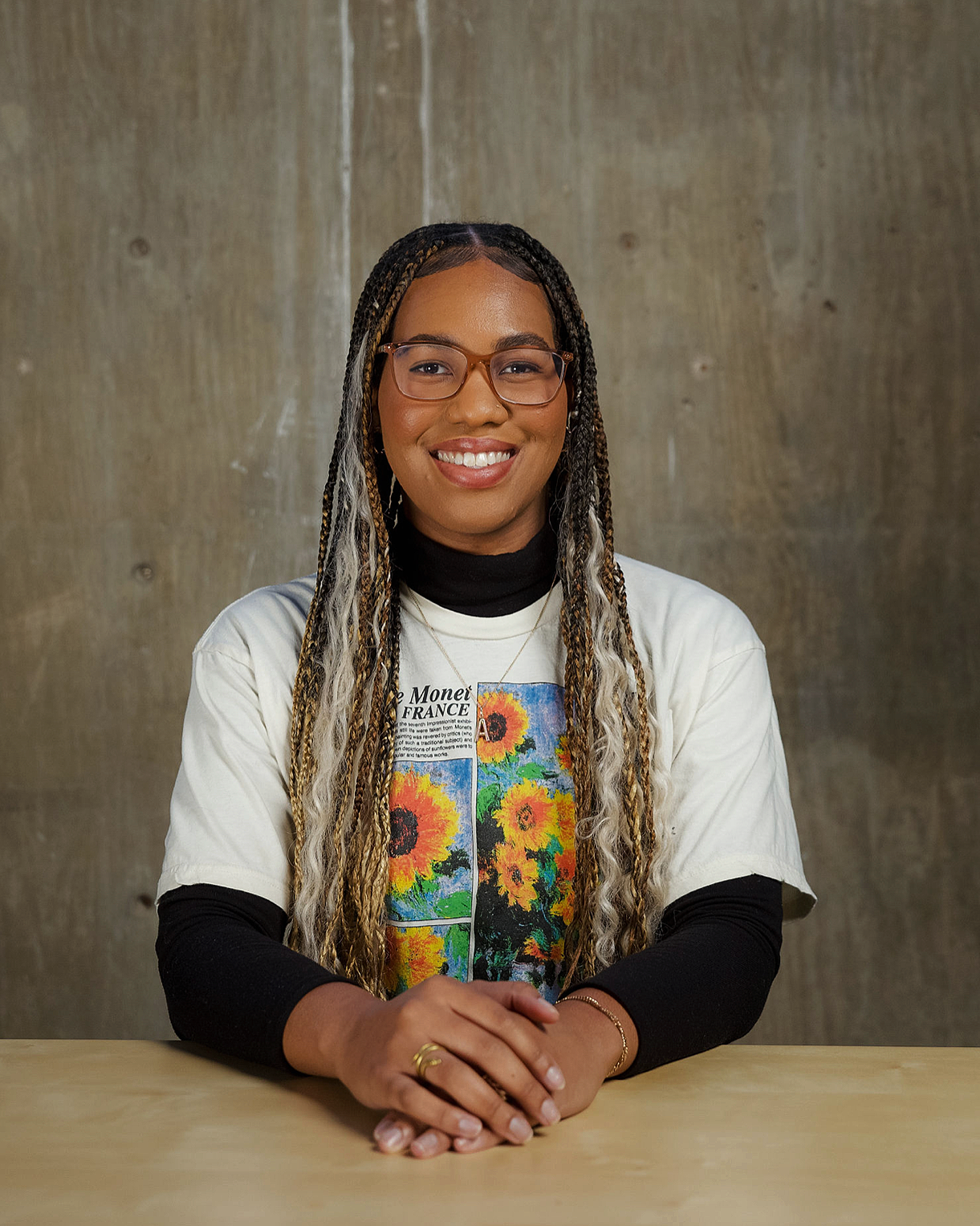
Autumn Johnson photographed by Bria Lauren (2023)
HOUSTON CINEPHILES
might know the feeling of walking into the Museum of Fine Arts’ Brown Auditorium too well. A long, neon-lit hallway that guides you to one of the key arthouse film hubs in the city. Or the familiarity of the warm lights that illuminate the entrance of River Oaks. In a place famously known for the Astros, NASA, and oil refineries - film is also something Houstonians hold dear to their hearts.
We had the pleasure of talking with one of the key players in curating the films we’ve loved to watch, Autumn Johnson. She is a cultural worker passionate about sustaining and supporting local art and film communities. She has guest-curated the film series, Through the Lens of Black Women at the Museum of Fine Arts, Houston (MFAH), a past programmer for Cinema St. Louis, and a 2024 New Orleans Film Festival Programming Fellow. Autumn is currently the Senior Social Media Manager at the New Museum of Contemporary Art and is pursuing a Master of Arts in Museum Studies at New York University.
We don’t typically hear about the programmer role outside of the festival setting. Even though programmers play a key role in the industry. So my first question is, with your experience in programming and working in museums, what do you think is the role of someone in both of these spaces in championing and creating community?
I want to reference this article that was recently in Seen magazine, which is published by Black Star, the same folks that do Black Star Film Festival. There's an article published by Maya S. Cade, she does the Black Film Archive and film programming, and is also now going to be working in distribution and taking over Milestone Films. She also has experience working in restoration of films. It's really interesting because I had a conversation with her for a paper I was writing about the intersection of museums, curators, and filmmakers. And something that she said that I really appreciated that there's a place for everything. Museums, arthouse theaters, film festivals, distributors, filmmakers, independents, and the whole mix. And it's really a whole ecosystem.
I think something that's left out of your question is also the role of the consumer, to be mindful of what they're consuming. If they're getting everything from Netflix versus, you know, an independent arthouse theater, versus the commercial theater, versus a museum. For a museum, particularly what I'm interested in for my personal studies or research, is that it seems like museums are often these places with large endowments and sources of funding. And they have this mission to serve the public and educate, but also sometimes to be artist forward. Whereas commercial businesses, organizations, or institutions that have commercial interests don't necessarily think that way. They're worried about what's going to sell tickets, and they're worried more about the financial risk. So I think there's a place for all of those things, and I think for filmmakers, the work is to put out what they feel is close to them, what they're passionate about making, what's been on their mind.
The same way that a writer should write what's on their mind, the two are very interchangeable for me. In my experience, as someone who did English Literature in college, it's just about how you communicate to an audience and that's where I think all these institutions have that role. To kind of mediate between the filmmaker and the consumer and help serve the artists in the way of getting their work out there because that can be very hard for an artist to do.
Whenever you're going through these roles, the museum, the programmer, the filmmaker, and the consumer, it seems like they are different entities. But I see now how you're tying them all together. Is that how you would say community looks, or do you think it's more than that?
Right now Houston's in a really interesting place where you have River Oaks, and then you also have some great orgs like Houston Cinema Arts Society and the Houston Latino Film Festival and there's so many other film festivals, like the Palestinian Film Festival. And you know, there’s the Museum of Fine Arts, Houston and Aurora Picture Show that are all bringing really interesting and different visual work that are outside of the commercial interest as well. And that's just giving people exposure of what a film can look like beyond what it looks like on Netflix. I think something that's really interesting at this moment when Warner Brothers is about to be acquired by Netflix, is that their whole messaging and their PR statement was like, this is going to be better for filmmakers because we can provide them more resources. And it's going to be better for the consumers because we're going to house all this content, and it's all going to be on one platform. But it's actually not all that great because when you think about it, who are the artists that they are going to give these opportunities to?
So to have these organizations locally, doing the work that they know is going to appeal to the local film community, to curate something really special rather than a Netflix algorithm picking out what you should watch, which is also based on commercial interests; it's really great and valuable and also creates a really special relationship with the filmmaker and the institution and the audiences that it's reaching.
It’s really special to imagine that a filmmaker, when they hear a certain city's name, they're going to say, “that played in Houston. My film played in Houston.” It had a sold-out show, or there were people who gave me really great feedback from that city or something. So that's the relationship there that's definitely not necessarily happening with the Netflixes of the world…I think that the cultural capital of selecting a film is always going to be better than a Netflix algorithm or a streaming platform algorithm.
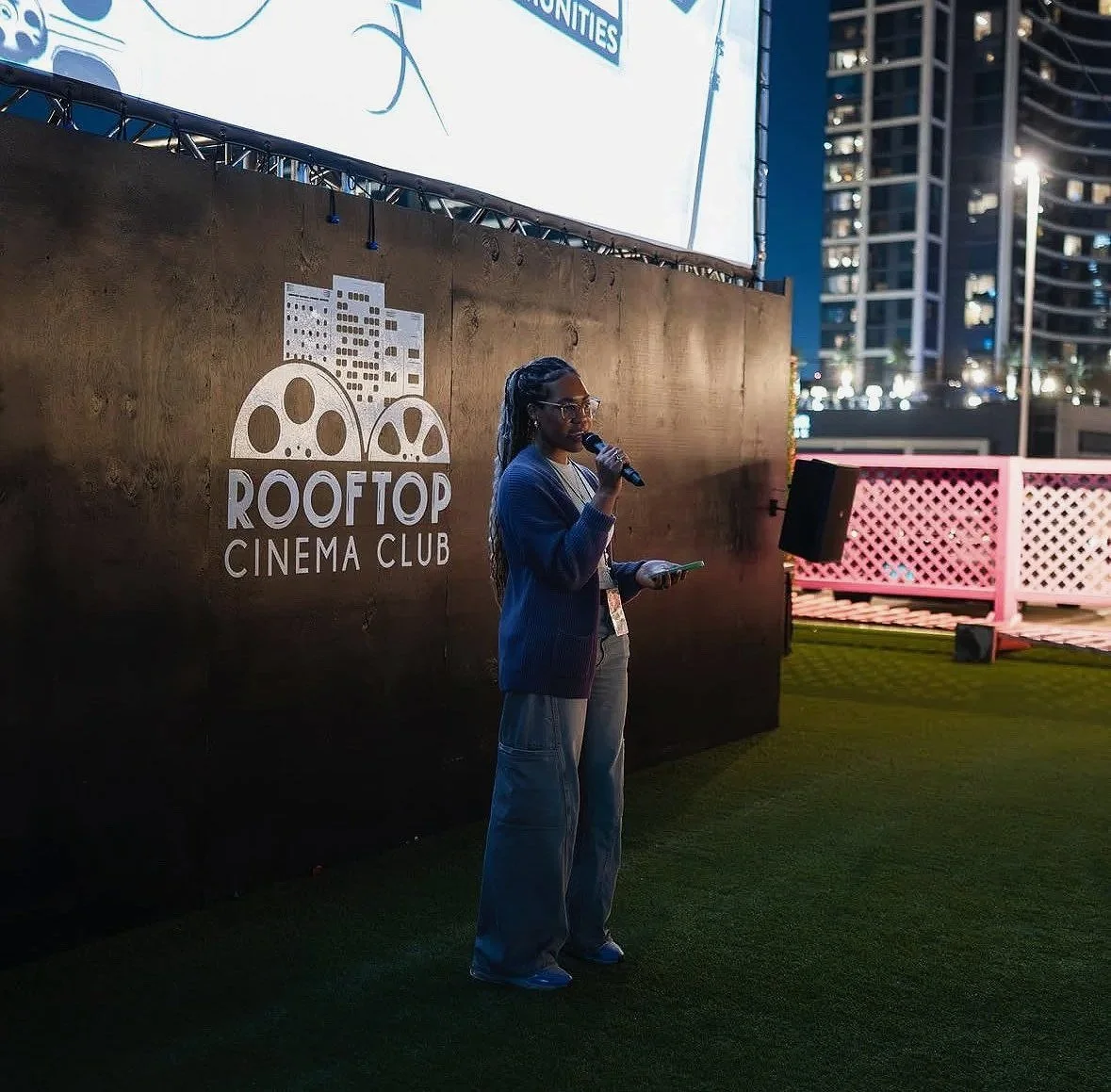
Autumn Johnson photographed by Tasha Gorel (2023)
You've programmed the Through the Lens of Black Women at the Museum of Fine Arts, Houston for the past three years. I wanted to ask you about how you curate a selection of films, because it feels stylistic in a way. Do you feel that you also take inspiration from directors or cinematographers? Or do you know if other programmers that you admire also take inspiration when programming a block/series?
I would say that even physical exhibitions that have interested me, have been more out of curiosity. Based on the thesis, I guess everything is a thesis when you really think about it. Trying to just discover and research. And I think that's how the Through the Lens series really came about. It was an opportunity that Marian [Luntz, MFAH Films Curator] once gave me. I had a summer internship [MFAH] and I took a major interest in Black independent cinema in the 90s. And I pitched the series. I said, “it’d be really interesting if you did a Black cinema series.” Kind of offhandedly. And then to get the offer was just like an invitation to do research and figure out, you know, the films that I haven't heard of and think about why I haven't heard of them. And also to share it with the world.
It’s initially what I was thinking when I did the series because it's such a new experience - film programming. It's not a job that's advertised in the program that we both did [referring to Media Production program at the University of Houston]. Maybe it is advertised at the UCLA's and NYU's of the world. But you know, it was a point of discovery for me and has really invited me to look at certain Black scholars that are doing a bunch of writing and really start to build knowledge bases and appreciate film in a really close and analytical way rather than watching it once and never seeing it again. It's also a great opportunity to watch something on a large screen in a theater and hear other people's reactions and almost envision what it was like for people to see it at the time that it was doing its own festival or theatrical run.
So to go back, I don't think any of my programming has been quite stylistic. The last two years I've kind of tried to center around a theme. I think Beauty and Expectations was the subtitle for the series for 2024. That was very vague for me. And its interpretation of questioning what is a Black film? Does a film have to look a certain way? Do you have to adhere to respectability politics to be respected as a film per se?
You've kind of already touched on it, but what do you find the most fulfilling from getting to curate a film selection or even do research, as you were mentioning?
I think just being in conversation, discovering a film that I haven't heard about and doing the research on how the film came to be is really rewarding. To have all this background knowledge that almost acts as a secondary film class for me. It’s made me kind of curious about the economics and the histories of independent film production in Hollywood and American film history. So I think that's a personal self rewarding experience, to experience these films. There's also a younger side of me that– I grew up doing theater in high school and I was always like, “I want to be an actress!” And then one day I was like wait, what if I was a director and an actress? And then when I got to college I was like actually should I just be a director or producer?
“
I feel like in college, I was very much like, there is no one doing this, but there are people doing it. It has been done and instead of building from ground zero, it's like we're at 40, let's get to 50!
I know that you also have a filmmaking background. So I wanted to know if that's something you're still interested in pursuing? What made you interested in more of the museum/programming world? Do you do both interchangeably?
So to go back to the previous question. It's really fulfilling for me to see a Black director that has done this and learn about their journey and the things they've endured and also kind of used that as a way to hopefully inspire other Black people, women of color, women in general, since there are so few women directors or women behind the camera. To be like, this is not impossible. I feel like in college, I was very much like, there is no one doing this, but there are people doing it. It has been done and instead of building from ground zero, it's like we're at 40, let's get to 50! You know, we don't have to reinvent the wheel, so much has come already and there are narratives to be built on and integrate ourselves into. It’s always powerful to learn from other people's experiences and weave that into your own to build yourself up.
And also, I think audience responses, even when the film isn't widely attended or a sold out show, are really rewarding, especially to hear people gasp and laugh because that's such a rare experience sometimes. You can be at home watching a movie by yourself and then you're reading Letterboxd comments and that's not the same as hearing everyone in the theater at the same time gasp or laugh with you. So there's something really rewarding about that. And I've had a couple of people come up to me after screenings and say, “oh, thank you for this.” And even people down the line saying “I wouldn't have watched this without it being shown here” is really nice too.
Do I still produce or make movies or anything? I mean, I still have ideas of directing or trying to act or being a producer. I love watching my friend's films and being like “oh I really like this!” Or you know, being like a consultant almost. I really enjoy that and giving feedback and advising them on maybe what festivals or grants they could apply to. I really enjoy that…I just really don't have time right now, but where I can lend a hand, I absolutely will. I really like learning and I really like analyzing and that's where I kind of began to think I have great project management and administrative skills, but also I really love research and analysis, which is kind of where I see myself landing within an institutional role. Because it's an opportunity to get paid to research, travel and watch and consume and I can think of no better thing to do. It's also like, I don't want whatever work or research I'm doing to be stuck at an institutional library somewhere because I spent seven years on a PhD and then no one ever reads it. Not to say nothing ever gets read once it's through a PhD or in academia, but it's a whole different ball game. And I think especially regarding Black communities, you can be in conversations with Black academics, but I've really been thinking about… how do you disseminate that knowledge to other people? Especially with the idea of a media or literacy crisis right now, there has to be other ways to reach people. Oftentimes film is the most powerful and engaging and entertaining way to reach an audience.
So I guess that's just been my format of choice in a way to communicate some things that I'm really passionate about, on a socio-political level. And as with many things, especially in America, Black people are on the forefront of a lot of these issues that have been going on for so long. So it’s really interesting to revisit some of these Black films and whatever's being produced on the independent level right now.
You mentioned earlier that programming, it's a career that's not really promoted widely. What would be some words of advice you would give to someone who is interested in pursuing this as a career?
Go out there and explore, see what's playing. Start following some filmmakers, subscribe to a film magazine, watch some short films because there's some really interesting work. There's so much film out there and there's so many people to pay attention to, so I just think anyone can be discovered and not discovered. I feel like discovered is almost like a keyword but there's so many conversations to be had with films.
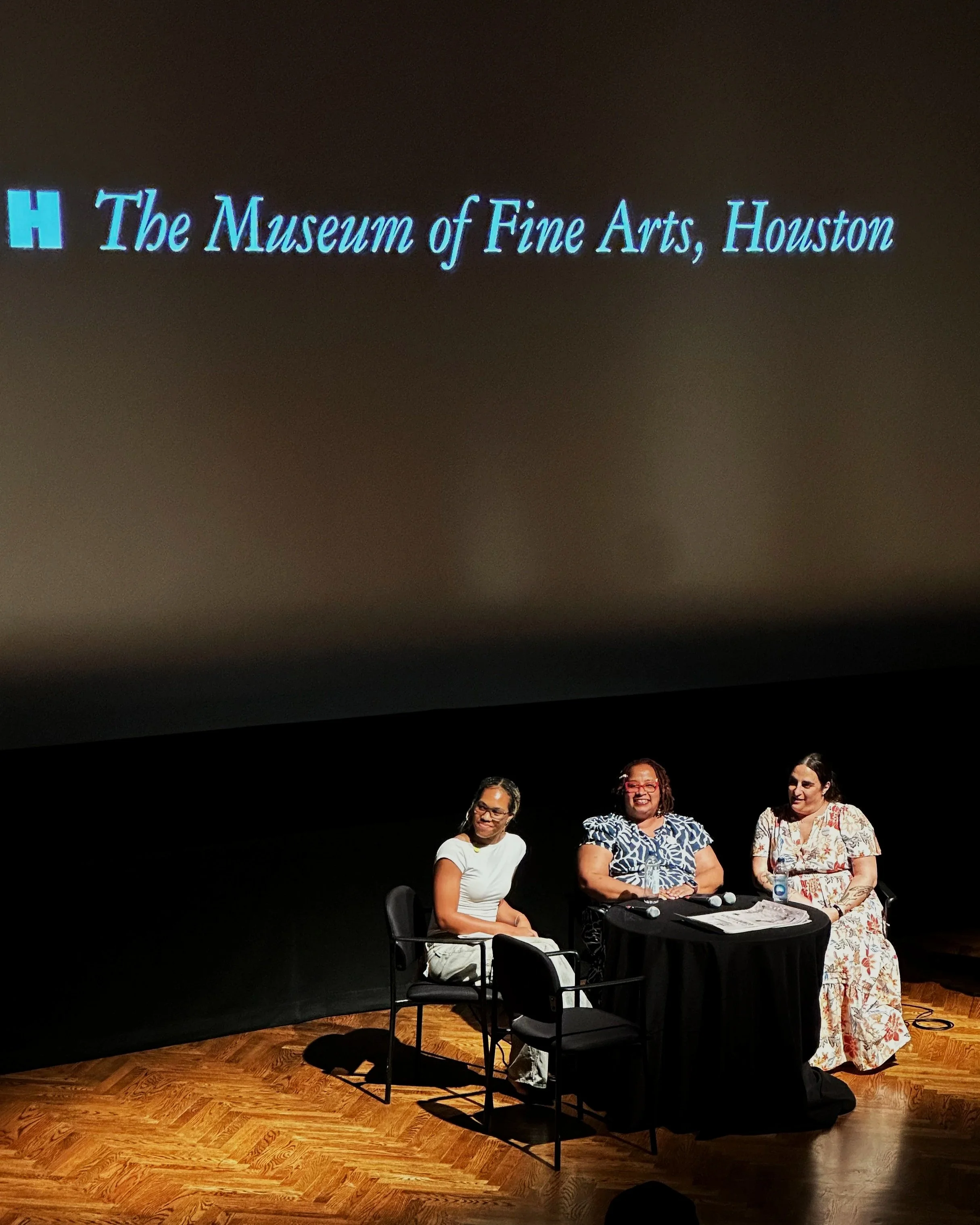
Photo courtesy of Autumn Johnson
You talked about media literacy earlier and I think sometimes filmmakers feel the pressure to either submit to festivals or show work on YouTube or Vimeo or other online platforms. Do you think there's a benefit to one over the other? And do you think that has made programming more difficult, since media is readily available online?
I don't have a real situation where I've sat on a selection committee or programming team that's been looking into different films and have been like, “oh this film is on YouTube and has over 100,000 views.” So a question I like to ask myself is, what is the value of showing it right now, right here in this place? If we're talking about a short film that's on YouTube that has been seen by a number of people. That doesn't really deter me from selecting it. When you're doing film programming, I think: does this film flourish more when it's in conversation with other filmmakers? Like where you situate a film, whether it be within a program or within a location or within a certain theater, it can recontextualize the moment it’s in. How people read it, which is a really interesting thing when you think about all the films that are being restored or having these anniversary screenings and all this stuff. These films are being brought out again, not only because they're good, but often because they're still relevant or almost ahead of their time in some way… And I guess you can say not all film festivals are the same, unfortunately. Some have more cultural capital than others. But you know, ones that come with printed material like the Houston Cinema Arts Festival, the New Orleans Film Festival or Sundance, you know, like press materials and stuff like that; your film, your name being written down in a pamphlet or guide is a piece of history. Someone can look at that in 10 years and be like “I wonder what this film is, that's an interesting title” or “this filmmaker actually played here like 10 years ago.”
So I think there's a level of that permanence, that's almost like local history writing that's happening with festivals and especially museums who are, I think, quite better at documenting their programs and exhibitions. That stuff that doesn't happen with YouTube and then it's also - not to play by the game but - it’s a CV resume builder, you know. It's something to make people give you respect.
I'm sure you've seen Letterboxd's top four. And I'm sure you're going to get asked this down the line in your career, so I'll ask something similar before you hit the red carpet. What are your top four pieces of media? Film articles, books that you've been really into as of recently, music, etc.
My word of the year is discomfort. I think that's because I'm in a period where I just want to discover and be exposed to a bunch of new stuff because I think I've been too comfortable watching and listening to the same things for too long. So I'm in a phase where I'm just getting recommendations from friends and stuff like that. I will say the most recent film I watched is Singing in the Rain.
Walter Benjamin’s essay The Work of Art in the Age of Mechanical Reproduction. I had to read it for one of the classes in my program and I feel like since I've read it, I had to analyze it because I was leading the discussion in the class. But I feel like now I'm seeing it everywhere. It is one of those foundational essays.
Third one for you, Mountains by Monica Sorelle. I think about that film all the time and it is one of those…it's a film where it's just so good. It’s really preaching. Watching that movie for me, feels like a church sermon. I think especially now that we're in late capitalism, it’s a piece of media that I've definitely returned to and thought about a lot.
The fourth piece of media is the book Crazy Sorrow by Ben Pizzaro. Having just moved to New York from Texas, it’s interesting to read a book about two people falling in love here in New York, but also how people compromise their morals in exchange for comfort.
We can’t wait to see this initiative come to life!
WHAT’S NEXT FOR AUTUMN?
She is currently focused on her studies at NYU, her role at the New Museum (which is reopening to the public March 2026), and programming blocks for various festivals.
If Autumn could start a festival or project from scratch, she would focus on films that have become almost “lost media.” Through her research and positions at various institutions, Autumn has come across various projects that have been forgotten with time. Autumn’s dream project is to find a way to present those movies, even if the movie never got made.
You can find Autumn on Instagram @autumnrennej